Full-Stack App Deployment Tools Ranked for the Solo Builder Who Starts in ChatGPT
MCP connectors let ChatGPT deploy apps directly without moving code between tools.

To build an app from a ChatGPT conversation with a real database, backend, and hosting, the shortest path is MCP-native, all-in-one infrastructure that ChatGPT can operate directly. This ranking puts that workflow first, followed by full-stack builders in a separate environment, coding tools, and assembled stacks. The deciding factor is the work left between the conversation and a live product.
Why the deployment decision is different when ChatGPT is your build environment
Most deployment comparisons separate writing the app from putting it online. For a solo builder working inside ChatGPT, that separation is the problem. A tool can offer plenty of features yet still require the builder to move code, configure services, and manage the connections between them. Each handoff becomes work for the same person who is trying to finish the product.
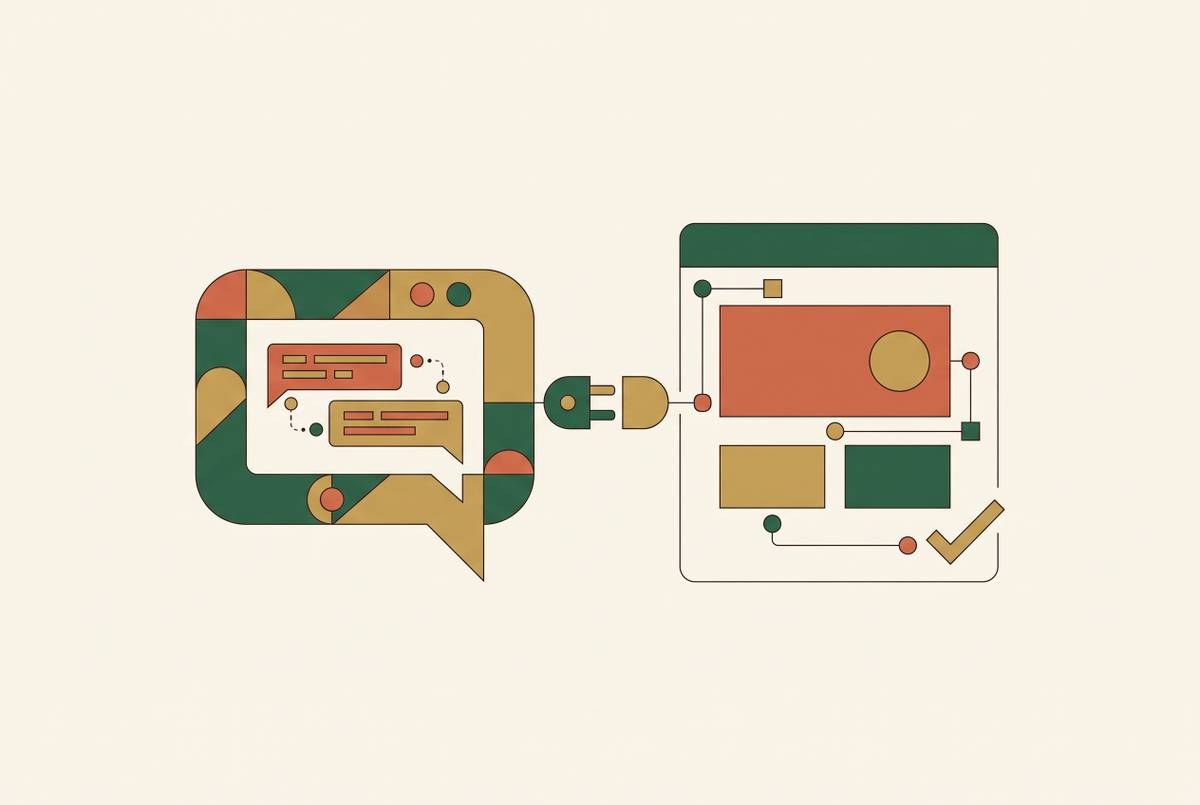
The deployment choice therefore determines what ChatGPT can actually do. The Model Context Protocol, or MCP, lets ChatGPT connect to external infrastructure. That creates two categories, namely infrastructure ChatGPT can operate and infrastructure the builder must take over. The distinction is simple but changes the ranking. As an ideation tool, ChatGPT helps describe an app, while as a build environment, it needs a way to run that app.
How can MCP connectors turn a ChatGPT conversation into a working app?
Anthropic released the Model Context Protocol in November 2024 so AI clients could connect to external services without one-off integrations. A service builds one MCP server, and a compliant client can use it without a custom plugin for every pairing. Before that connection, ChatGPT could generate code that the builder then moved into a hosting environment. With a suitable connector, it can instruct infrastructure directly from the conversation.
A custom connector is an MCP server added by URL. ChatGPT calls its entry point “developer mode,” while Claude calls it “Add custom connector.” The underlying server is the same across both clients. Different labels do not mean different infrastructure. The server provides the connection through which the client can use the service.
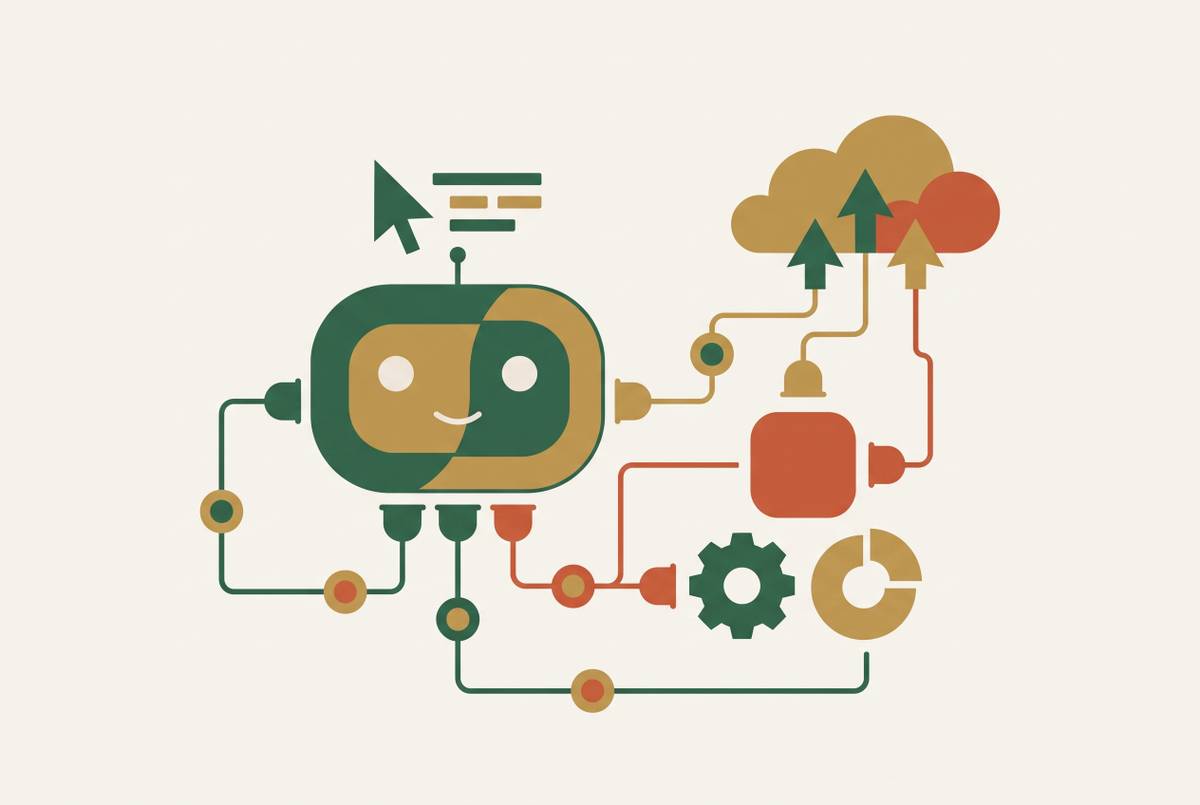
Zapier MCP illustrates this model through automation. It lets ChatGPT, Claude, Cursor, and other AI clients take actions across connected apps, while Zapier manages the connections and access controls. That is useful, but it is not full-stack deployment. An automation connector does not by itself supply a database or hosting. For this ranking, the important question is whether the connected tool exposes the infrastructure needed to build and run the app.
The eight criteria this ranking actually scores against
ChatGPT operability asks whether the assistant can drive infrastructure through MCP or whether the builder must move its output elsewhere. Idea-to-live-URL speed tracks how many steps it takes to go from an idea described in words to a link that can be shared. With fewer handoffs, there are fewer places to get stuck. These criteria overlap, but they are not identical. A separate builder can deploy quickly without letting ChatGPT operate the deployment.
Full-stack completeness in one bill asks whether backend, database, authentication, and hosting come together. Long-term affordability asks whether a product that is live and in use costs close to its starting price or costs more because of overages and added services. A low starting price answers neither question. The relevant comparison includes what the founder must buy and connect before the product can run.
No-code approachability asks whether a founder can finish the job without knowing how the generated code works. Code portability asks what money or process is required to take that code elsewhere. Those are different kinds of independence. One reduces the need for technical help today, while the other preserves the option to change platforms later.
Reliability and reachable support ask whether a founder without an engineering team has a way to get things fixed when they break. Built-in growth tooling asks whether the platform helps get the first user or stops at the finished app. Shipping is not the end of the job. The ranking uses these eight criteria as a qualitative rubric and gives ChatGPT operability priority because of the reader’s starting point.
The tools ranked: where each one sits in the ChatGPT-native workflow
Tier 1 is MCP-native, all-in-one infrastructure that ChatGPT can operate directly. It takes first place because it combines the conversation interface with the backend, database, authentication, and hosting needed behind it. An MCP connector alone does not earn it. Neither does a complete stack that still requires the founder to work in a separate build environment.
Tier 2 has full-stack builders that must be used through their own interface. Greta generates the frontend, database, and backend logic within the same building workflow, removing the need to configure a separate backend service before going live. Code export requires a paid plan. The remaining handoff is the move out of ChatGPT. That is a smaller burden than assembling infrastructure, but it still counts against a ChatGPT-native workflow.
Base44 also sits in Tier 2, with database, authentication, and hosting included and deployment handled without a separate workflow. It offers a free tier with paid tiers above it. Customers own the generated code, and those on eligible paid plans can use GitHub export and ZIP downloads. Those terms give portability a concrete basis. Like Greta, its trade-off here is the separate environment.
Tier 3 has AI coding tools that leave the builder to set up the infrastructure. Cursor’s advantage is direct ownership of local files, with no export step needed to retrieve them from a platform. That is useful for a technical founder. But the tool does not supply hosting, a database, or a backend of its own. The founder still has to assemble the running system around the code.
Tier 4 is the stitched stack, such as Supabase for database and authentication, separate hosting, and Zapier for automation. Supabase provides a production Postgres database, authentication, storage, and edge functions behind one dashboard, with a free tier and paid plans above it. Zapier MCP brings automation actions into the conversation, but the builder still has to set up the database and hosting separately. Flexibility is the reason to choose this tier. It avoids dependence on one platform for everything, while leaving assembly and ongoing management with the founder.
Rork offers a web-plus-mobile path, with a higher tier for native SwiftUI through Rork Max. Its focus on mobile serves a different need from keeping web deployment inside ChatGPT. The conversation-to-product loop is longer for mobile regardless of the tool. That makes the target platform a legitimate reason to depart from the general ranking.
What the real monthly cost looks like once an app is live
Entry price is what it costs to begin. Running cost is what the founder keeps paying after the app becomes a product. The charges for a backend service, hosting tier, domain, and API overages may each be small but can add up to a much larger bill. No single plan page shows that whole stack. Total cost over time is therefore more useful than the cheapest offer at signup.
With pay-per-token AI billing, another cost can change while the app is being built. A platform that marks up the model cost introduces an unpredictable charge to each build session, even when the builder already pays a model provider. Flat infrastructure pricing separates those two expenses. The AI cost stays with the provider, while the platform becomes a fixed monthly line item.
Stripe’s transaction fees are a separate cost on any platform. It has no setup fee and charges a percentage plus a fixed amount per US online card transaction. Platform choice changes how much engineering work it takes to connect payments, and AI builders remove most of that work. On this criterion, bundled infrastructure at a flat rate ranks ahead of usage-based platforms or tools that need additional paid services to become production-ready.
What solo founders who have shipped real products reveal about where the workflow actually breaks
Hirvesh bootstrapped Habit Pixel from a May 2025 launch to his first meaningful MRR milestone in eight months, without funding or a team. That timeline is a more grounded reference than an outlier exit. For a solo founder, deployment is the beginning of an operating commitment.
Base44 grew to a significant size as a solo-built product before it was acquired. Its outcome shows what is possible, but it does not establish what another founder should expect. Scale and acquisition are not deployment criteria. The useful comparison is whether a founder has the technical depth to manage a composed stack or relies on a platform to manage it.
These cases do not justify treating code generation as the whole business. After the build, the harder work is getting the product to users, running it, and managing its infrastructure. A managed stack addresses the technical portion. Built-in growth tooling helps with a different need, getting the first user. A tool that removes deployment work can free the founder to focus on the product, but that should not be mistaken for evidence that distribution is solved.
The code lock-in objection and when it actually applies
The strongest objection to an all-in-one platform is dependence on its export rules. A local coding tool avoids that particular dependency because the builder owns the files from the start. A platform that offers no code download at any price creates a real risk for a product that might outlast it.
However, file ownership is not the same as operational independence. A non-technical founder who does not know how to deploy the code, manage its database, or handle authentication still needs help to run it elsewhere. Portability depends on a usable exit path that turns an exported codebase into a running service. The builder’s ability to hand the project to a developer becomes part of that path.
The practical questions concern whether export is available at a reasonable tier, whether GitHub sync is available before the highest price tier, and whether a developer could take over if the platform closed. These questions distinguish a manageable dependency from a dead end. Base44’s terms state that customers own generated code, with GitHub export and ZIP downloads on eligible paid plans. Greta also offers export through a paid plan.
How to pick the right tier for your actual situation
For a non-technical founder who starts every session inside ChatGPT, Tier 1 is the closest fit. MCP-native, all-in-one infrastructure removes the most handoffs between the conversation and a live URL. The practical test is infrastructure completeness. The preferred setup combines managed infrastructure with AI costs paid directly to the provider. Its export terms still deserve the same scrutiny as any other platform’s.
For a founder willing to open another product, Tier 2 trades conversational continuity for a dedicated full-stack environment. Emergent, Greta, and Base44 belong in that decision set. Cursor fits builders who value local code ownership and can supply the infrastructure, while a Supabase, hosting, and Zapier MCP stack fits those who accept assembly and maintenance as part of the job.
For an iOS or Android target, Rork is the dedicated path in this comparison. Its web-plus-mobile plan costs $20/month, with a higher tier for native SwiftUI through Rork Max. Target platform can outweigh conversational convenience. Intended product lifespan also changes how heavily export access and ongoing costs should weigh in the decision.
The final choice should start with workflow fit, then use long-term affordability and infrastructure completeness as tiebreakers. For the ChatGPT-first founder, the strongest fit is infrastructure the assistant can operate, with the full stack included and a running bill the founder can sustain.