Solo Founders Who Replaced a Dev Hire With an AI App Builder
AI-powered app builders are helping non-technical founders ship products without hiring developers.
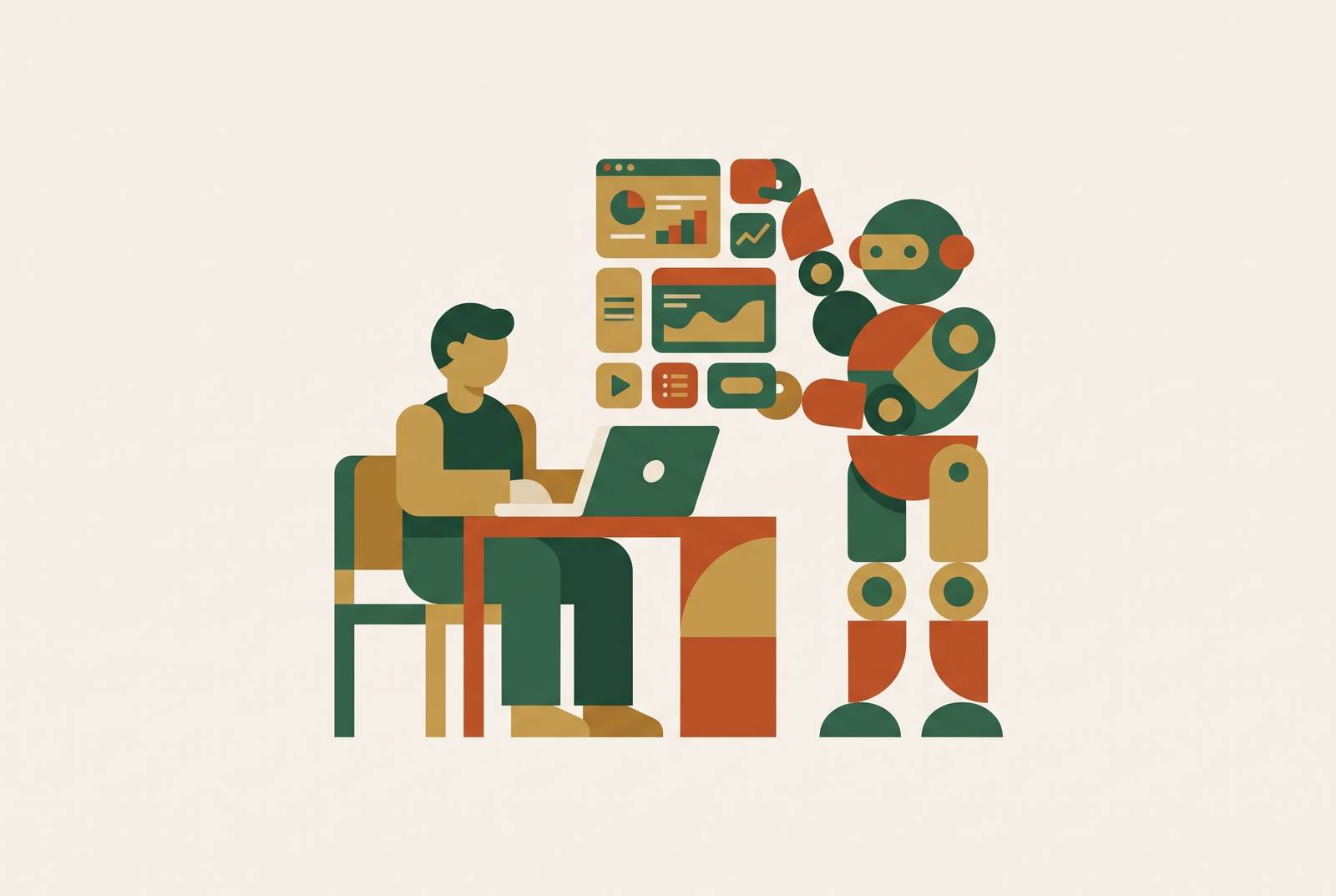
Solo founders in 2026 aren't waiting to afford a developer. This piece traces how that substitution actually works: what founders built, what it cost, and what the infrastructure has to do to hold up under it.
Why solo founders are skipping the dev hire
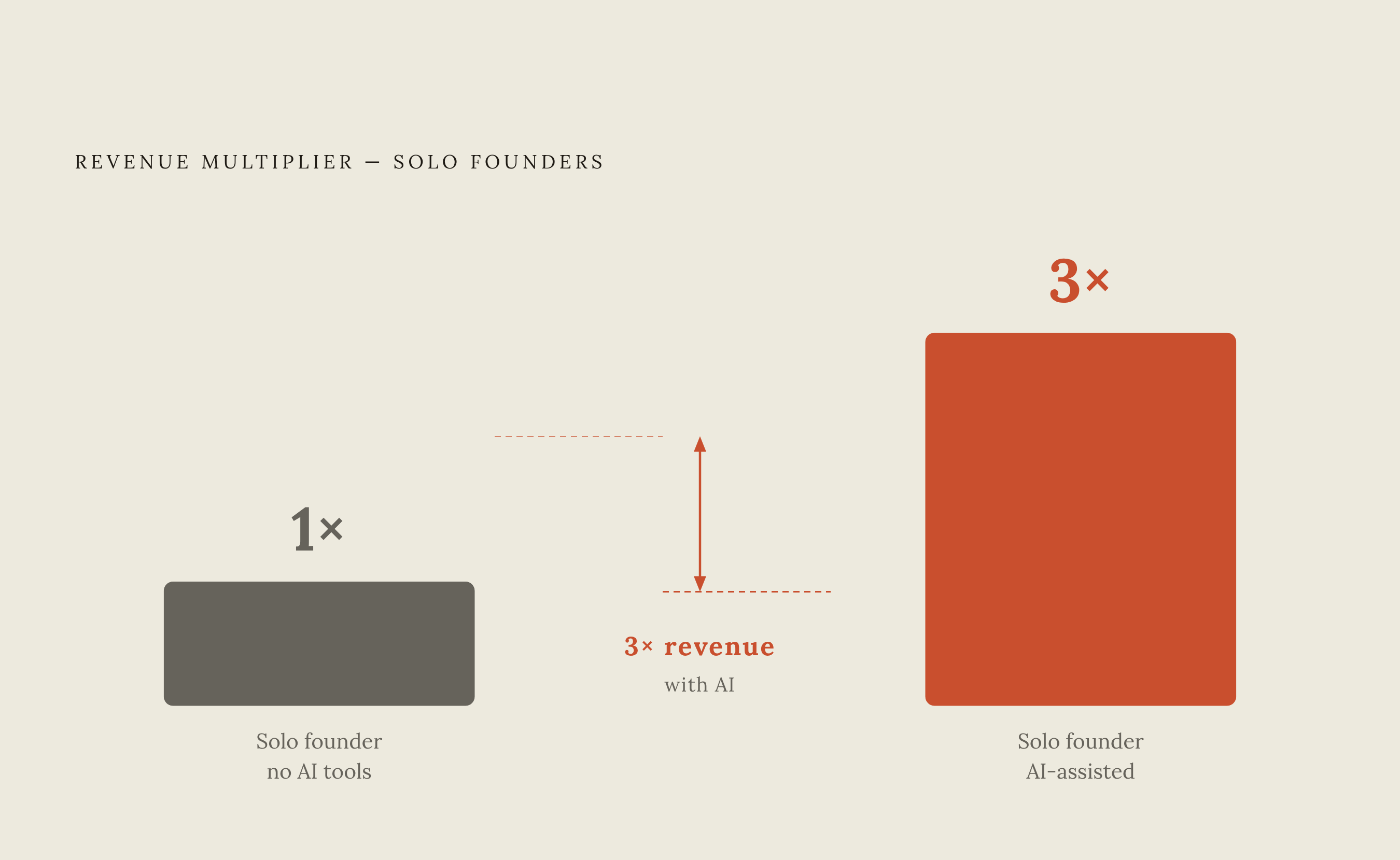
The shift here is that founders never learn to code at all and ship a paying product anyway, not that they type faster because an AI assistant fills in the boring parts. Solo-founded startups have grown steadily as a share of all new U.S. companies since 2019, and among them, the founders using AI to build and run their business now pull in roughly three times the revenue of solo founders working without it. That gap shows up because the economics flipped: a founder can now run a full working stack for a small monthly cost, instead of paying a developer's salary to do the same job, and the price difference is large enough to break the old rule that more output needs more people on payroll.
Entrepreneur Loop reports that most active vibe coding users are non-developers. That detail matters more than it might first appear. It means the people building with these tools are nonprofit directors, consultants, and shop owners who understand their customer better than any contractor they could hire, now building the thing themselves instead of hiring someone to translate their idea into code.
The scale of this is no longer a fringe story. Fortune cites U.S. Census Bureau data counting tens of millions of non-employer companies generating over a trillion dollars in combined revenue, and the number of U.S. solopreneurs is now estimated to top 41 million, a labor market shift worth taking seriously, not a handful of outlier success stories.
What founders built and shipped
Maor Shlomo built Base44 alone. Within a month of its February 2025 launch, the platform had pulled in nearly $1.5 million in subscription revenue. It grew to hundreds of thousands of users and multi-million dollar annual recurring revenue before Wix acquired it in June 2025 for a large cash sum, with additional earn-out payments running through 2028. The method behind the build is as instructive as the outcome: Shlomo tracked exactly where his own time went, then built AI agents to take that time back, one to sort through user feedback, one to catch UX problems, one to run QA tests, and one that watched shipping code and turned it straight into marketing content. He also built a customer support bot, then shut it down after two weeks, because answering tickets himself kept him close to what was actually happening inside the product. The lesson there is that a founder running solo still has to choose, deliberately, which parts of the job to keep doing by hand.
Dana Snyder runs Positive Equation, a digital consultancy for nonprofits, and used AI coding tools to turn her own consulting process into a software platform that acts as an on-demand advisor for nonprofit clients. The platform walks organizations through building a monthly giving program step by step, producing fundraising strategies, donor communication plans, and program names suited to each group. Snyder has said the platform let her reach a market far bigger than she thought possible as one person, and offer her services at lower rates than a traditional consultancy could manage. She handles most of her clients through the platform today and remains the company's only full-time employee.
Pieter Levels built fly.pieter.com on a stack about as stripped down as software gets: one index.php file, jQuery running the front end, SQLite behind it, no build step at all. It's a deliberate bet that the less infrastructure a solo founder has to manage, the less there is to break.
Mattia Pomelli built an AI design tool in three weeks. Six weeks after launch, it was generating real monthly recurring revenue, with no team and no outside funding behind it. Danny Postma built HeadshotPro, an AI headshot generator, into a product bringing in six figures a month, working solo out of Bali. His earlier AI product, Headlime, had already sold for a meaningful sum just eight months after launch.
Every one of them built something customers paid for, on their own, without a technical co-founder waiting in the wings. What made that possible wasn't just the AI's ability to generate code. It was everything that code needed to actually run, stay up, and hold customer data safely, long before any of these founders typed their first prompt. The next section digs into that infrastructure.
What "replacing a dev hire" means
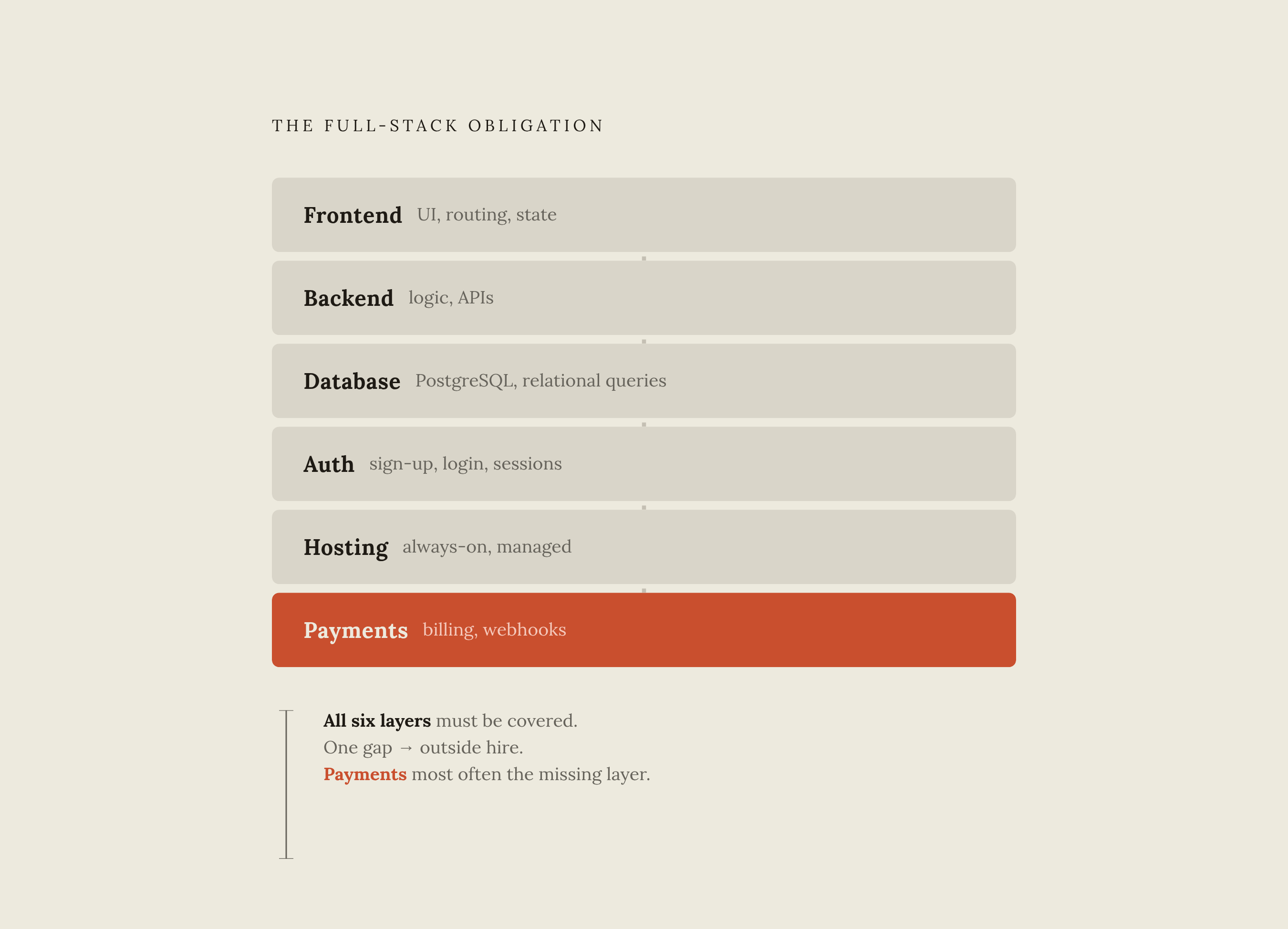
A developer hire never existed to write code alone. The job covered the frontend a customer sees, the backend that runs behind it, the database that stores everything, the login system that keeps accounts secure, the hosting that keeps the site live, and the payment system that takes money. A platform only replaces that hire if it covers every one of those pieces itself, because each gap left uncovered is a place where the founder ends up needing to hire someone anyway.
A simple prototype and a real, paying product need different things to survive. A real app needs a backend that stores and retrieves customer data reliably, every time, without losing it. It needs a database that enforces structure: relational databases like PostgreSQL give a founder foreign keys, flexible queries, and built-in guardrails that looser document-style storage doesn't offer, and that gap becomes serious the moment a product scales past its first few hundred users. It needs real authentication, meaning secure sign-up, login, and session handling that keeps one customer's account separate from another's. It needs hosting that stays online without the founder manually managing a server somewhere. And it needs a live, shareable link from the very first day the founder wants to show it to anyone.
Plenty of AI coding tools stop short of handling all of that, and the gap appears in what one source, Momen, calls a steep "terminal barrier": the founder is still expected to read, check, and maintain whatever code the AI produces, which assumes a level of coding literacy that most non-technical founders simply don't have. Code ownership is a quieter risk: some platforms push the actual code into a GitHub repository the founder owns outright. Others keep that code locked inside their own servers, so if the founder ever wants to leave the platform, they leave empty-handed, without the product they thought they'd built.
Blink's evaluation framework offers a clean test for sorting through all of this: can one non-technical founder use the platform start to finish, alone, for years, without ever handing a piece of it to an engineer? Full-stack AI app builders pass that test. AI coding assistants and tools that only generate a visual interface do not.
Why an all-in-one platform beats stitching tools together
The risk a solo founder faces isn't any single weak tool in their stack.
Every extra tool bolted onto a stack adds its own point of failure, and a solo founder absorbs all of it personally: the attention it takes to monitor, the time it takes to debug, the risk that one vendor's outage takes the whole product down. A founder running solo is already playing the role of operations lead, support desk, and bookkeeper. Every integration added on top of that is one more thing that can quietly fail over a weekend with no engineer on call to catch it.
Automation platforms carry a specific version of this risk. Startup Owl reports that Zapier's Pro annual plan starts out affordable for a modest number of monthly tasks, but costs climb sharply once volume increases, running consistently several times higher than comparable alternatives at the same usage level. Zapier also doesn't automatically throttle a runaway loop, and multiple Trustpilot complaints describe surprise charges running into the hundreds of dollars, typically $400–$1,200, after a misconfigured automation looped overnight.
The real test isn't which tool is cheapest to try for a weekend project. Blink's evaluation framework draws the line at whether a platform stays affordable once the product is live, generating real revenue, and running for years rather than days. A solo founder is often building the one product their business depends on, on top of whatever platform they chose at the start, for the long haul.
A Forbes piece on AI agent startups points out that always-on agents running continuously against large datasets, combined with API token costs that climb with usage, can produce compute bills that start to rival the salary of the employee they were meant to replace. A flat, predictable monthly plan is a decision about whether the business survives a bad month, making it a continuity decision as much as a financial one.
How MCP connectors let founders build inside AI tools
Infrastructure works best for a solo founder when it's built into the AI tool they're already using, rather than asking them to leave that tool and go configure something separate. That's the job MCP, the Model Context Protocol, does. Anthropic released it as an open standard in November 2024, and it was built to be model-agnostic, so a connector built once works whether the AI agent on the other end is Claude, ChatGPT, or a different model entirely.
By April 2026, MCP had moved well past its early, experimental phase and into widespread production use. It's working infrastructure that founders are already relying on to run live products.
The founder's experience of this is simple even when the standard behind it isn't: ask the AI tool to set up a database, connect a payment system, or deploy a live site, and the connector on the other end of that request does the actual infrastructure work, without the founder ever leaving the chat window they're already working in. The sections above are possible because of a connector standard that lets the founder's AI of choice reach real, production-grade infrastructure directly, on command, without a developer standing in between, not just an AI that can write code.
Sources
- Solo Founder Startups Are Booming: How AI Tools Let One Person Build What Used to Need a Team of 10
- Solo founders are using AI to do the work of entire teams—but going it alone has limits | Fortune
- 7 Solo Founders Building $1M+ AI Businesses in 2026
- Best AI App Builder for Solo Founders & Bootstrappers in 2026
- Why AI Agent Startups Are Becoming The New Solo-Founder Playbook